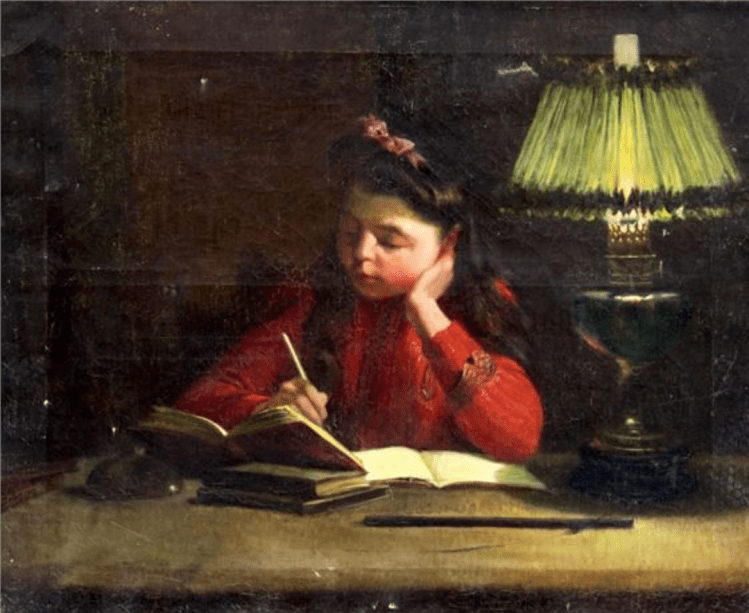
Education of women in the early 19th century in France was almost non-existent. It was left to convent schools, who understandably focused on religious education – with mathematics and reading rarely taught or taught minimally. Girls were not encouraged, or even allowed, to access secondary education as were boys. Girls were assumed they would marry, and the skills to be wife were stressed.
But things were to change by the end of the century, with the advent of Feminism, and the passage of various laws allowing women to be educated like men. The education was still not equal, but better than at the beginning of the century.
In 1880, Camille Sée was a French politician who championed a law – now referred to as the Sée law – which established lycées, or schools, for girls. In 1881, he also created the École normale supérieure in Sèvres.
While convent schools taught did teach some things, the nuns were in charge of religious and moral topics. Any other topics were taught by laywomen. Georges Sand attended a convent school – The English Augustinian Convent, Rue des Fossés St. Victor, and she wrote a book (not surprisingly) about her experiences there. The book, My Convent Life, it is from her longer 1855 work, L’histoire de ma vie (The story of my life). It gives wonderful glimpses into what this education was like, even noting that the girls were divided into two groups by the girls themselves: good girls (les sages), stupid girls (les bêtes), and devils (les diables).
Once the Sée Law was passed, women were able to finally begin to have an education that would prepare them for something other than wives and mothers – although many women who taught still married and had children.
The women who attended the school at Sevres, were known as Severines.
MORE TO COME SOON……

